BUYER'S GUIDE · EYE CARE

Which slit lamp or ophthalmic microscope should I buy?

Updated · Labo America product team
THE SHORT ANSWER

For the exam lane, choose a slit lamp: the eVO 300 and eVO 400 both give 5 step Galilean magnification from 6.5x to 40x, LED light and a beam splitter ready for imaging. For cataract and anterior segment surgery, choose a surgical microscope with a stable red reflex and foot control, such as the Prima OPH. The Stella adds motorized magnification for operating rooms that want it.

OUR PICKS

Which LABOMED® model fits which practice.

If you areChooseWhy
Optometry or ophthalmology exam laneeVO 3005 step 6.5x to 40x, 5 W LED, red free, cobalt blue and heat absorbing filters, integrated beam splitter.
Exam lane with slit tilt and neutral density filtereVO 400Same 6.5x to 40x optics, adding 20 degree slit tilt and a neutral density filter.
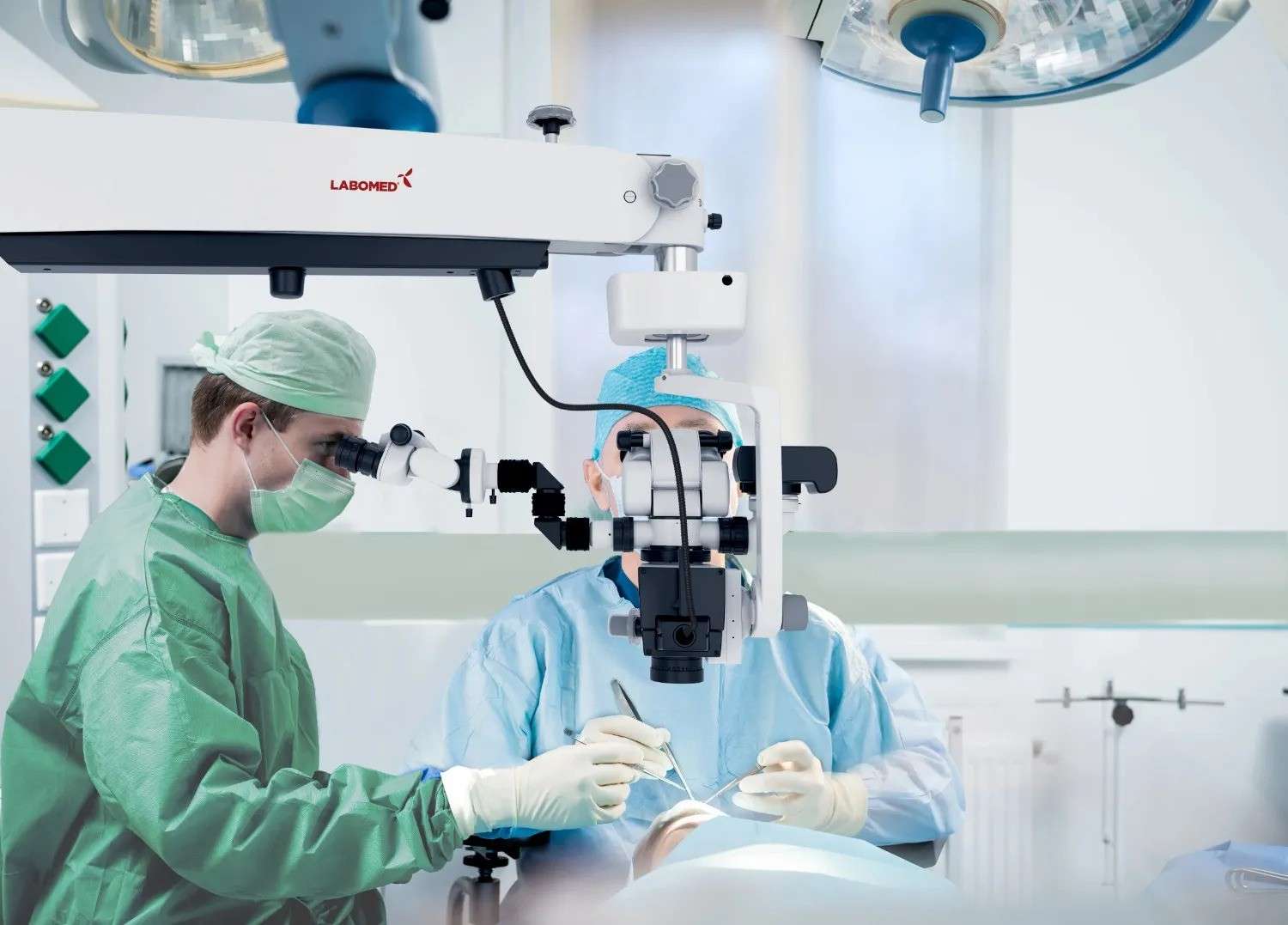
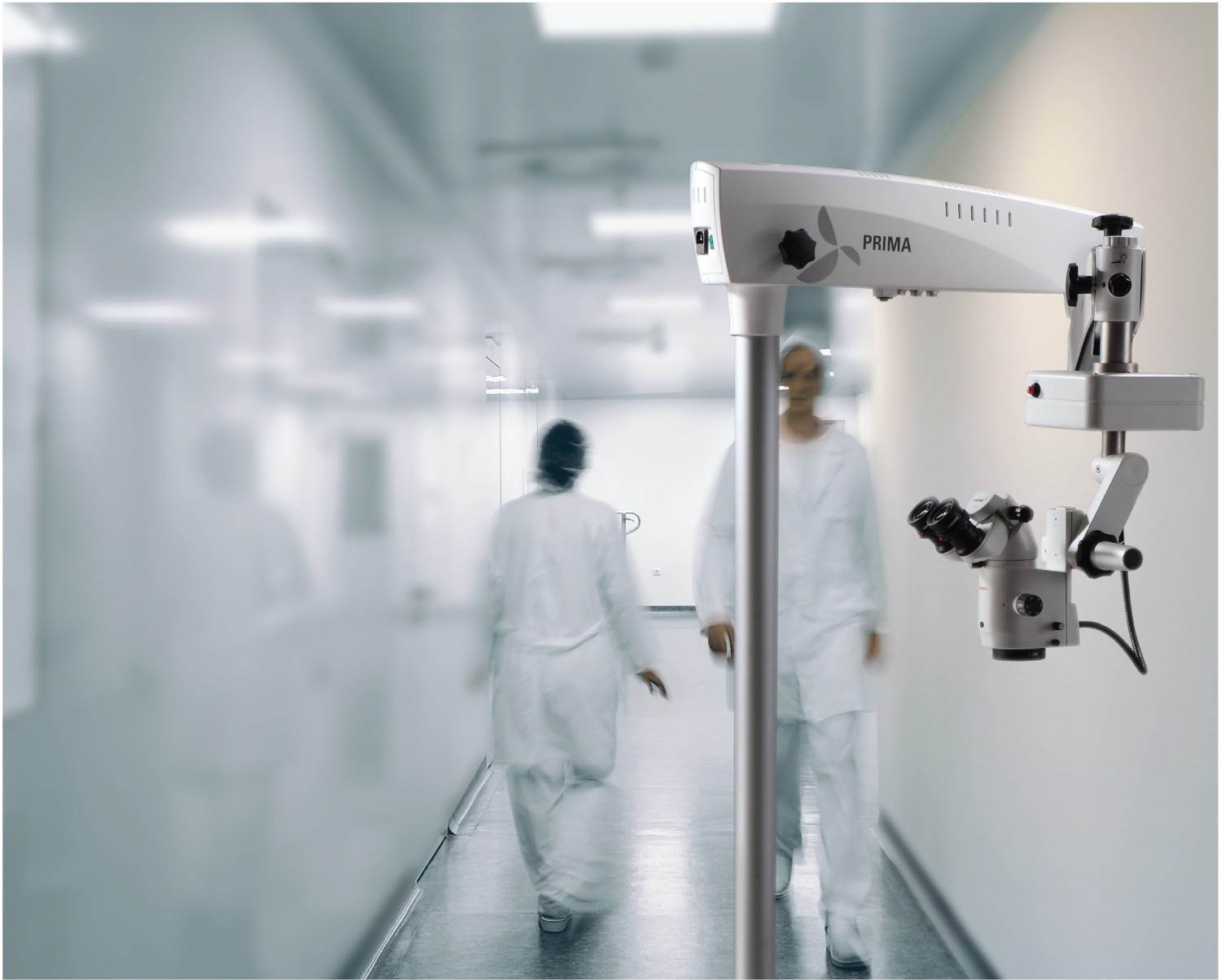
Cataract and anterior segment surgeryPrima OPHRedReflex optical system, motorized 40 mm fine focus, XYZ foot control, 0 to 210 degree head, f200 objective.
Operating room, motorized magnificationStellaMotorized 5 step changer, fluorescein and green filters, 10 function foot switch.

What should I look for in a slit lamp?

Check the magnification steps, the light, the filters and whether it is ready for imaging. The eVO 300 and eVO 400 use Galilean optics with 5 steps (6.5x, 10x, 16x, 25x, 40x), WF 12.5x/18 eyepieces with plus or minus 5 diopter adjustment, a 5 W LED and an integrated beam splitter, so you can add a camera later.

What is the difference between the eVO 300 and the eVO 400?

Both share the same 5 step Galilean optics, 5 W LED and digital ready beam splitter. The eVO 300 has red free, cobalt blue and heat absorbing filters and high eye relief viewing tubes. The eVO 400 adds a neutral density filter, 20 degree slit tilt and a different slit aperture range.

Which slit lamp filters do I need?

Cobalt blue is used with fluorescein to show corneal staining and contact lens fit. Red free makes blood vessels and hemorrhages stand out. A heat absorbing filter keeps light comfortable for the patient, and a neutral density filter dims it further. The eVO 300 includes red free, cobalt blue and heat absorbing filters, and the eVO 400 adds neutral density.

What microscope do I need for cataract surgery?

A cataract microscope needs a bright, stable red reflex, motorized focus you control with your foot, and a working distance that leaves room for instruments. The Prima OPH has a RedReflex optical system, a 50 W LED with minimal UV and IR emission, motorized fine focus over 40 mm, and an f200 objective with an f175 option. It moves in X, Y and Z from a 6 function foot control and has a 0 to 210 degree tiltable binocular head.

What is red reflex and why does it matter in a surgical microscope?

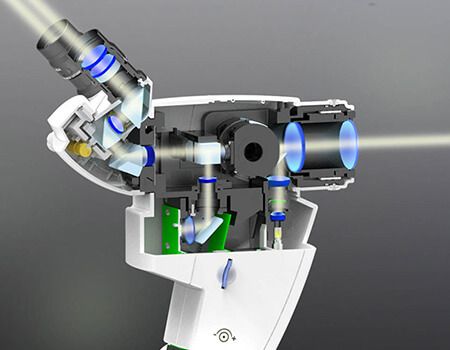
Red reflex is the orange red glow of light returning from the retina through the pupil. During cataract surgery it back lights the lens and capsule, which helps the surgeon see the capsulorhexis and lens fragments. A microscope designed for ophthalmology aligns its illumination close to the viewing axis to keep that reflex strong. The Prima OPH uses a RedReflex optical system.

Can I add photo and video to a slit lamp or surgical microscope?

Yes. The eVO 300 and eVO 400 slit lamps have an integrated beam splitter, so they are digital ready. The Prima OPH accepts 1/2 inch and 1/3 inch C-mount, DSLR (APS-C and full frame) and smartphone adapters and the Atlas+ camera through its beam splitter. The Stella pairs with the Atlas+ 4K camera on its included beam splitter.

Prima OPH or Stella: which surgical microscope fits my operating room?

Choose the Prima OPH for cataract and anterior segment work with foot controlled focus and XY movement. Choose the Stella when you also want motorized magnification, more filters and a 10 function foot switch. The Stella's filters include daylight, blue barrier, cobalt blue for fluorescein and green for vascular identification.

How much does a slit lamp or ophthalmic microscope cost?

Price depends on configuration: imaging, assistant viewing, mounting and filters. Labo America does not publish prices; dealers quote the setup you need. LABOMED® medical products carry 2 years on parts and labor, 2 years on cameras and 1 year on electrical parts, with lifetime cover available as an optional add-on.

AT A GLANCE

Key specifications compared.

From the current LABOMED product records. Confirm configuration specific values with Labo America.

SpecificationeVO 300eVO 400Prima OPHStella
Magnification5 step changer: 6.5x, 10x, 16x, 25x, 40x total5 step changer: 6.5x, 10x, 16x, 25x, 40x total5 step changer: 0.4x, 0.6x, 1.0x, 1.6x, 2.5x5 step changer: 0.4x, 0.6x, 1.0x, 1.6x, 2.5x; motorized, tiltable with auto lock
ObjectiveApochromatic, MaxLite coated opticsApochromatic, MaxLite coated opticsStandard: f200 mm. Optional: f175 mmStandard: f200 mm. Optional: f175 mm
Working distanceAvailable on requestAvailable on requestStandard: 200 mm. Optional: 175 mmStandard: 200 mm. Optional: 175 mm
Field of viewAvailable on requestAvailable on request8.47 to 52.94 mm10.30 to 64.30 mm
Light sourceLED, 5 WLED, 5 WLED, 50 W, minimal UV and IR emissionLED, 50 W, minimal UV and IR emission
Viewing headViewing tubes with high eye-relief; integrated beam splitter (digital-ready)Integrated beam splitter (digital-ready)Standard: 0 to 210° tilting binocular head. Optional: 45° inclined binocular head0 to 210° tilting binocular head
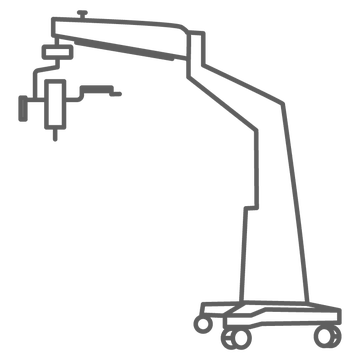
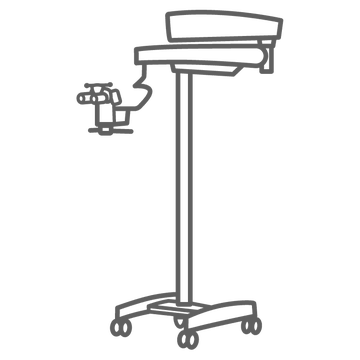
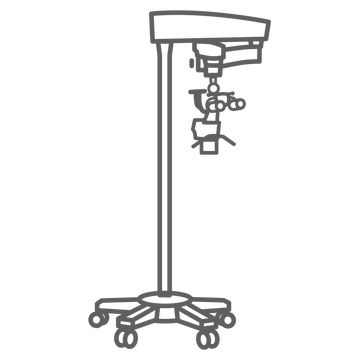
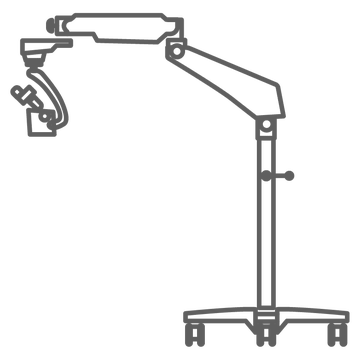
MountingTable base 465 x 316 mm; optional motorized tableTable base 465 x 316 mm; optional motorized tableFloor stand, wall mount, ceiling mountFloor stand
StandDurable metal platform; table base 465 x 316 mm; optional motorized tableDurable metal platform; table base 465 x 316 mm; optional motorized tableH-base on 4 locking castorsPyramid base on 4 locking castors; counterbalanced, vibration free
Contact us