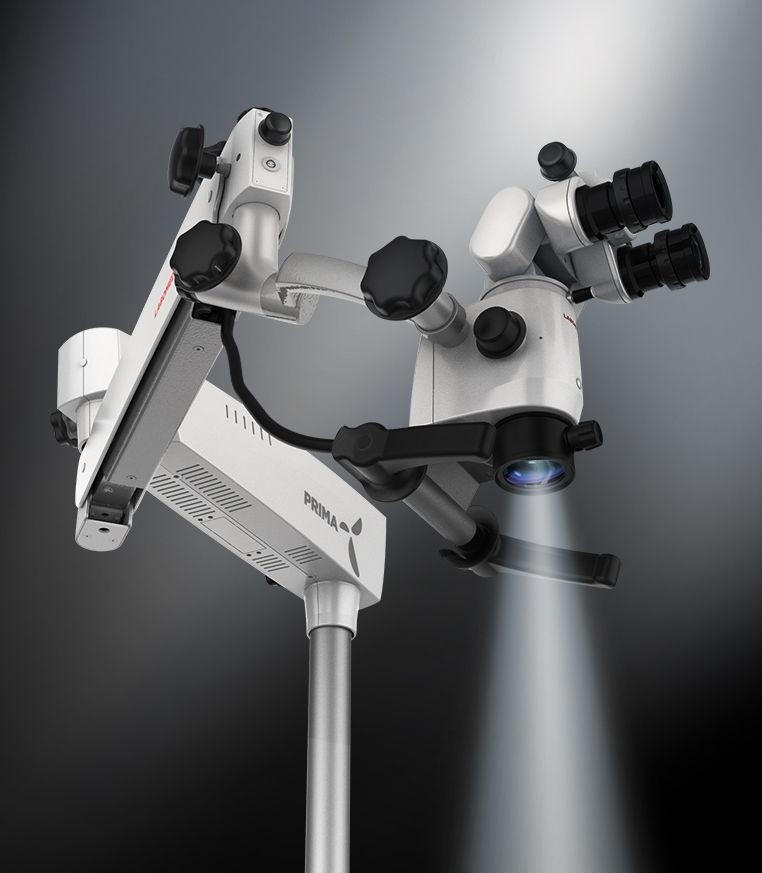
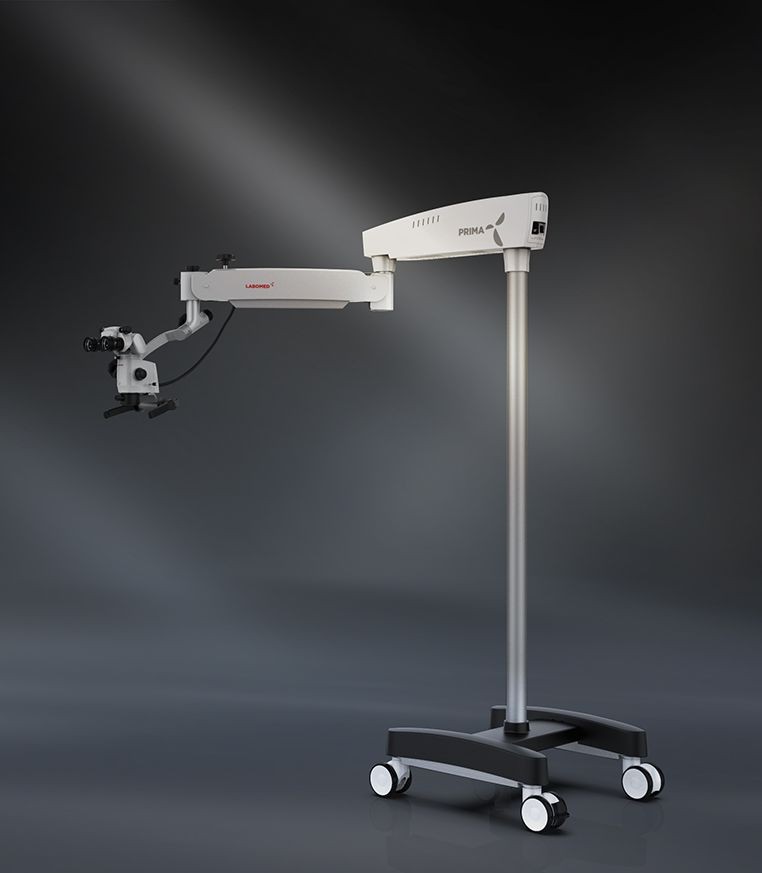
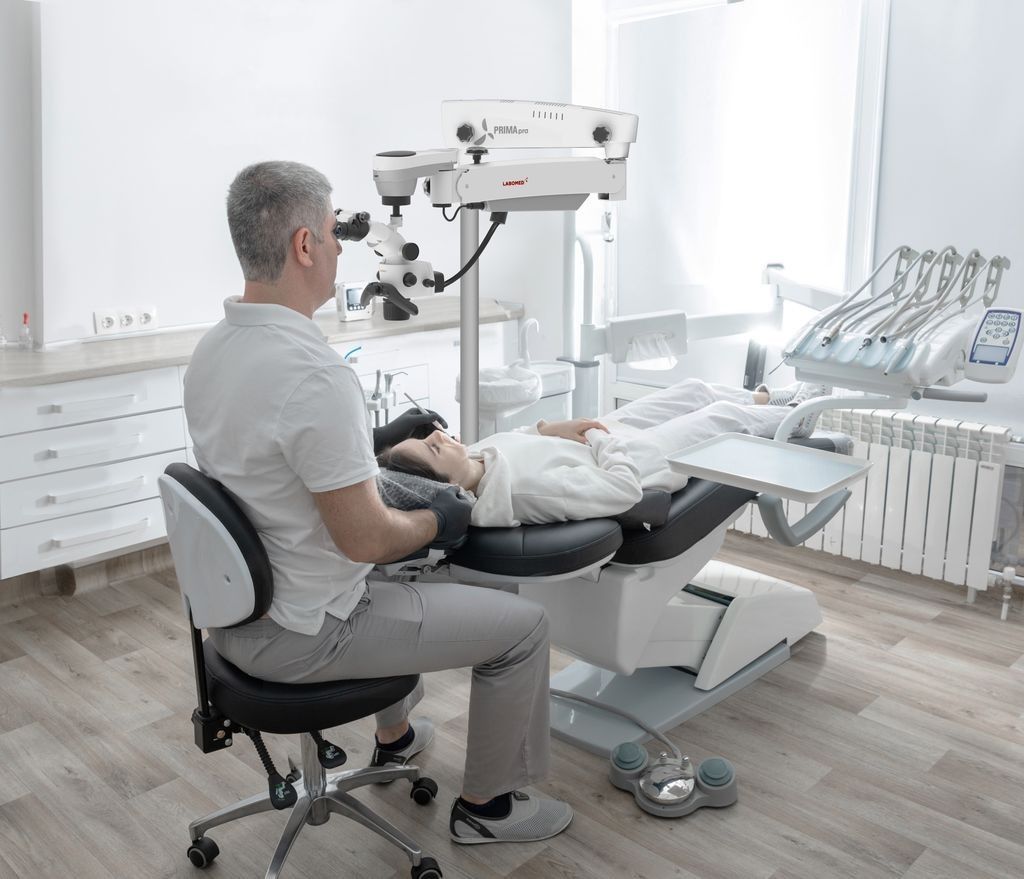
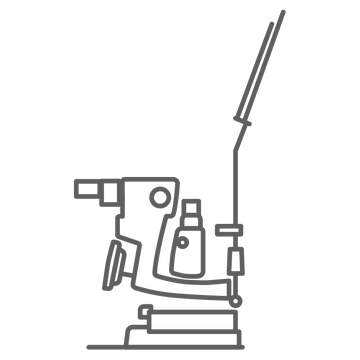
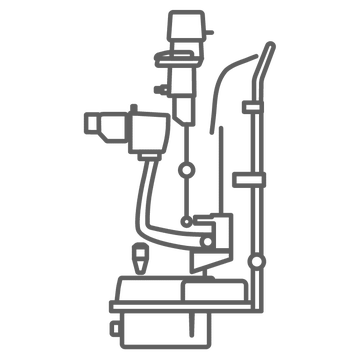
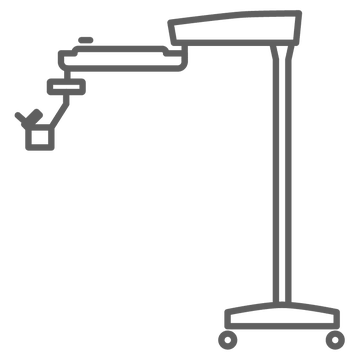
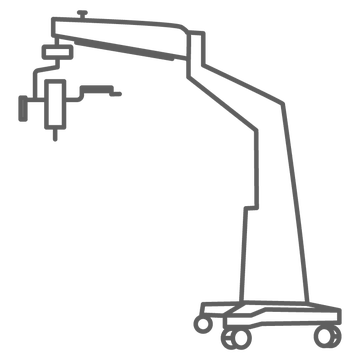
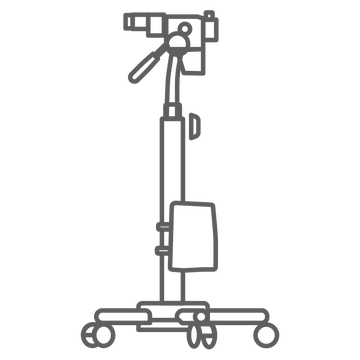
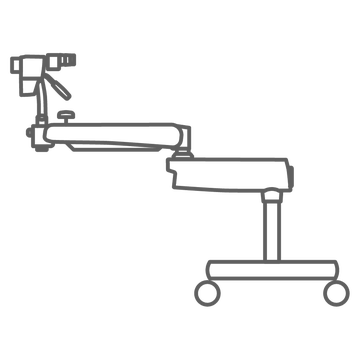
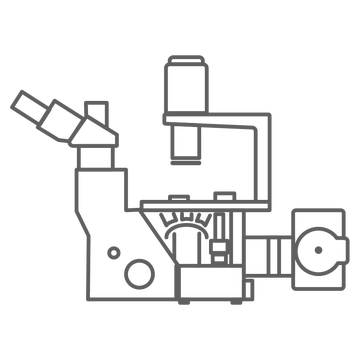
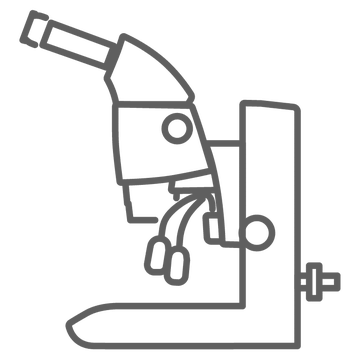
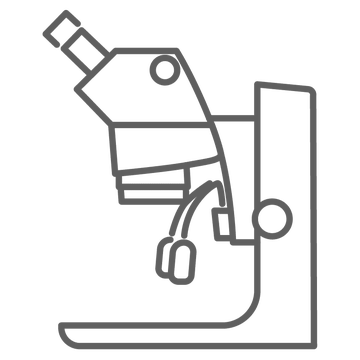
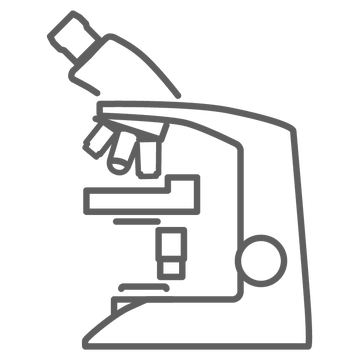
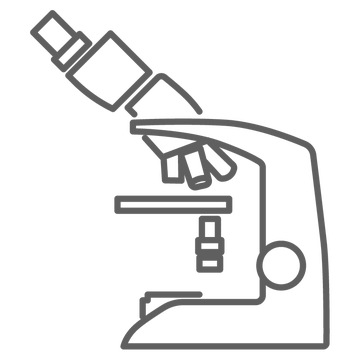
Match the microscope to how much of your day happens under magnification. A general practice adding its first microscope is well served by the Prima Lite. Practices that work under the microscope all day, such as endodontics, periodontics and microsurgery, get more magnification range, more light and an auto balancing arm with the Prima Pro. Clinicians who want continuous zoom and documentation built in choose the Magna.
6 step changer from 0.3x to 3.0x, NuVar 10 variable focus objective standard, 200,000 lux fiber delivered LED and an electromagnetic auto balancing arm.
I'm a general dentist just starting out. What microscope should I buy?
Start with a microscope that is simple to own and easy to grow into. For most general dentists that is the Prima Lite. It has a 5 step apochromatic magnification changer (0.4x, 0.6x, 1.0x, 1.6x, 2.5x), MaxLite coated optics and a SuperLux 27 W LED built into the microscope body, so there is no fiber optic light cable to replace. It mounts on a floor stand, wall or ceiling. As your microscope work grows you can add a NuVar variable focus objective, a beam splitter and camera for documentation, and a second observer tube for your assistant.
Are dental microscopes only for endodontists?
No. Endodontics made microscopes common, but general dentists use them for restorative margins, crown preparations, inspecting cracks and margins, hygiene checks and patient education with photos and video. The Prima Lite is built for that general practice mix.
How long does it take to get comfortable working with a dental microscope?
Plan on a learning period. Most clinicians start with low magnification on routine procedures, set up their posture, eyepieces and working distance once, and add higher magnification and documentation as they gain confidence. Ask your dealer about a demonstration and setup so the microscope is fitted to you and your operatory from the start.
Should I buy dental loupes or a dental microscope?
Loupes give you one fixed magnification that you wear. A microscope gives you a range of magnification you step through, light that travels along your line of sight, and an upright working posture because you look straight into the eyepieces instead of down at the mouth. A microscope also lets you photograph and record what you see through a beam splitter and camera. Many practices keep loupes for exams and hygiene and use the microscope for endodontics, crown margins, crack detection and documentation.
How much magnification does a dental microscope need?
You want a low step to orient yourself, a middle step to work and a high step to inspect detail such as canal orifices, margins and fracture lines. Five steps cover general dentistry. Specialists often want more range or continuous zoom. In the LABOMED® range the Prima Lite and Prima Trainer use 5 steps from 0.4x to 2.5x, the Prima Pro uses 6 steps from 0.3x to 3.0x, and the Magna uses a continuous 1:6 Galilean zoom with click stops. Higher power 12.5x eyepieces are available on all of them.
What working distance or objective should I choose?
Working distance is the space between the objective lens and the tooth, set by the objective's focal length. A 250 mm objective is a common starting point. A longer focal length suits taller clinicians and gives instruments more room. A variable NuVar objective lets you refocus by turning a collar instead of moving the microscope, which helps when you change patient position. The Prima Lite offers fixed f200, f250, f300 and f400 objectives and two NuVar variable objectives: NuVar 7, with a working distance of 200 to 270 mm, and NuVar 10, with a focal length of 300 to 400 mm (working distance 220 to 320 mm). The Prima Pro ships with a NuVar 10 (f 300 to 400 mm) as standard, with a NuVar 20 (f 200 to 400 mm) as the option. The Magna includes a NuVar objective with a 300 to 400 mm focal length, and offers a NuVar with a 200 to 400 mm focal length as the option.
Floor stand, wall mount or ceiling mount?
A floor stand can move between operatories and needs no construction. A wall or ceiling mount clears the floor, keeps the operatory easier to clean and gives a wide reach, but it is fixed to one room and the wall or ceiling has to be checked for load first. The Prima Lite, Prima Pro and Magna are each offered as floor, wall and ceiling versions. The Prima Trainer is a table mount with a C-clamp for teaching benches.
Built in LED or fiber optic light: which is better?
Both put bright, cool LED light on the field. A built in LED sits in the microscope head, so there is no light cable to route or replace. A fiber delivered LED keeps the light engine in the stand and can put more light on the field. The Prima Lite uses a built in SuperLux 27 W LED rated at more than 100,000 lux. The Prima Pro uses a 50 W LED delivered by fiber optic at 200,000 lux at 200 mm. The Magna uses a 50 W LED at 120,000 lux. The Prima Lite and Prima Pro LEDs are rated for 50,000 hours and the Magna for up to 60,000 hours.
Which filters does a dental microscope need?
Two filters matter every day. A yellow filter lets you shape composite under the microscope light without curing it early. A green filter makes blood appear dark so tissue and vessels stand out. Every LABOMED® dental microscope includes yellow and green filters. The Prima Pro adds a blue filter and TrueLux, a soft warm color temperature.
Can I take photos and video through a dental microscope?
Yes. A beam splitter sends part of the light to a camera while you keep working, so you can record cases for patient education, referrals and records. The Magna includes a beam splitter (DBSi) and a DSLR adapter, and pairs with the Atlas+ 4K camera. The Prima Lite and Prima Pro accept beam splitters with C-mount, DSLR and smartphone adapters and the Atlas+ 4K camera, and a VESA arm can hold a monitor where your patient can see it.
How does a dental microscope improve posture and ergonomics?
A microscope lets you sit upright and look straight ahead while the optics look down at the tooth. The Prima Lite and Prima Pro use a 0 to 210 degree inclinable binocular head, and the Magna uses a 0 to 210 degree tilting head with Rotoplate, so you can set the eyepieces to your posture rather than bending to the patient. All three have an interpupillary range of 49 to 78 mm and locking diopter adjustment on both eyepieces.
Can my assistant see what I see?
Yes. A 50:50 beam splitter feeds a second observer tube so your assistant can follow the procedure and anticipate the next instrument. Assistant viewing is offered on the Prima Lite, Prima Pro and Prima Trainer, and on the Magna through an Assistoscope observation tube on the included beam splitter.
How much does a dental microscope cost?
Price depends on configuration more than on the microscope alone: the stand or mount, the objective, the light, a beam splitter and camera, and assistant viewing. Labo America does not publish prices because dealers quote the configuration you need. Build your setup in the online configurator, then request a quote. LABOMED® medical products carry 2 years on parts and labor, 2 years on cameras and 1 year on electrical parts, with lifetime cover available as an optional add-on.
What microscope works for a dental school or training program?
A training program needs the same optics students will meet in practice on a mount that fits a bench. The Prima Trainer uses the 5 step apochromatic changer from 0.4x to 2.5x with MaxLite optics, a 50 W LED rated at 125,000 lux, a 0 to 210 degree tilting head and 550 mm of arm travel on a table mount with C-clamp.
AT A GLANCE
Key specifications compared.
From the current LABOMED product records. Confirm configuration specific values with Labo America.
We use essential cookies to run this site and count visits without cookies. With your permission we load Google Analytics 4 to measure how the site is used and Google Ads to measure our search advertising. We do not use cookies for retargeting ads. Your choice is kept for 30 days. Privacy policy
EssentialRequired for the site to workALWAYS ON
AnalyticsGoogle Analytics, how the site is used
Advertising measurementGoogle Ads, search ad performance only

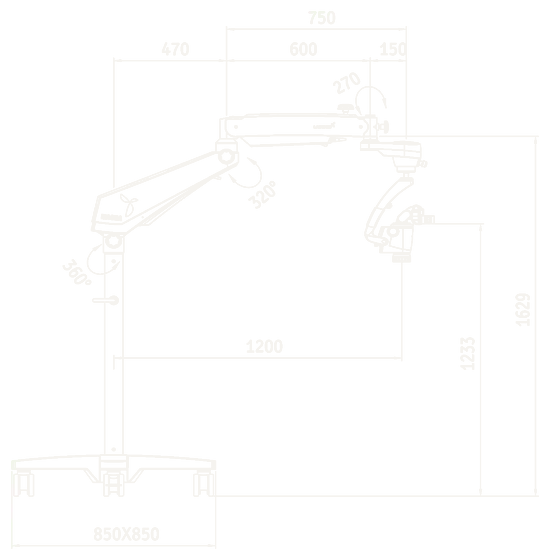
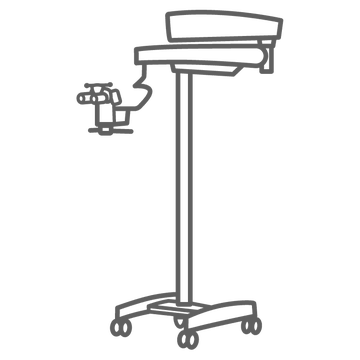 Prima Lite
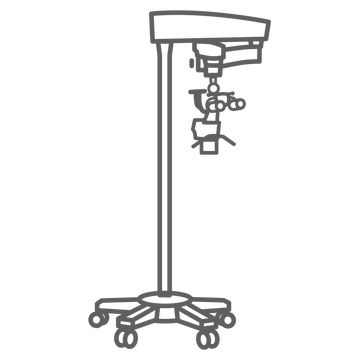 Prima Pro
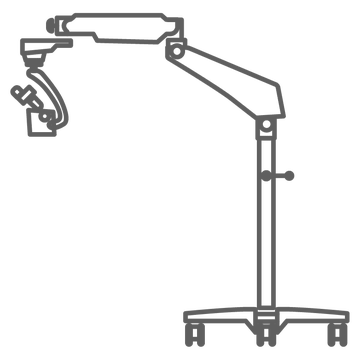 Magna
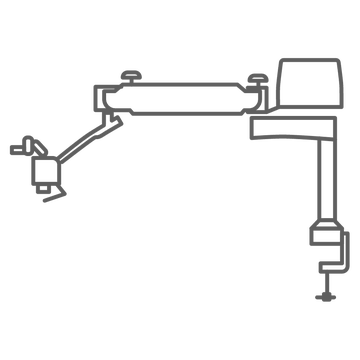 Prima Trainer