How Inspection Microscopes Are Used in Electronics and PCB Assembly Quality Control?

Key Takeaways:
- An inspection microscope plays a critical role in electronics manufacturing and PCB quality control.
- Stereo microscopes and digital microscopes help identify defects before products reach final assembly.
- Proper magnification and high-resolution imaging support accurate SMT component inspection and solder joint evaluation.
- Inspection microscopes contribute to improved product quality, process consistency, and manufacturing efficiency.
- The right microscope supports quality standards throughout PCB assembly, rework, and inspection workflows.
Modern electronics continue to become smaller, denser, and more complex. Components that once could be inspected with the naked eye now require precision optical systems to verify assembly quality and manufacturing accuracy.
Whether inspecting solder joints, evaluating component placement, or performing PCB rework, visibility remains a critical part of the inspection process.
That is why the inspection microscope has become a standard tool across electronics manufacturing environments. It helps quality teams, engineers, and assembly technicians verify workmanship, identify defects, and maintain consistency throughout production.
This guide explores how inspection microscopes support PCB assembly quality control and what to consider when selecting the right system for electronics applications.
What This Blog Covers
- The role of an inspection microscope in electronics manufacturing
- How microscopes support PCB inspection and assembly verification
- Applications for SMT component inspection and solder joint evaluation
- Differences between stereo microscopes and digital microscopes
- What to look for when choosing a microscope for electronics quality control
An inspection microscope is an optical imaging system used to examine components, assemblies, and manufactured products at magnified levels, helping support quality control processes, defect identification, and production verification.
Why Inspection Matters in Modern Electronics Manufacturing
As electronic devices become more compact, quality expectations continue to rise.
A single solder defect, misaligned component, or damaged connection can affect the performance of an entire product. As a result, manufacturers rely on multiple inspection stages throughout production to maintain consistency and meet quality standards.
This is where an electronics assembly inspection microscope becomes valuable.
Rather than relying solely on automated systems, inspection microscopes provide detailed visual confirmation during assembly, testing, rework, and final verification.
Across modern PCB manufacturing environments, microscopes help support:
- Incoming material inspection
- Assembly verification
- Solder joint evaluation
- Rework operations
- Final quality control processes
PCB Inspection Requires More Than Magnification
When evaluating a PCB inspection microscope for quality control, magnification is only one part of the equation.
Image clarity, depth perception, working distance, and lighting quality often have a greater impact on inspection efficiency than maximum magnification alone.
A quality circuit board inspection microscope should provide:
- Clear visualization of fine details
- Comfortable working distance
- Stable illumination
- Accurate depth perception
- Consistent image quality across magnification levels
The goal is not simply to see components larger. It is to support confident evaluation of assembly quality and manufacturing accuracy.
Stereo Microscopes in Electronics Assembly
For many electronics applications, a stereo microscope for electronics assembly remains the preferred solution.
Stereo microscopes provide true three-dimensional viewing, allowing operators to evaluate component height, solder joint profiles, and assembly details with natural depth perception.
This becomes particularly useful when inspecting:
- Surface mount technology (SMT) assemblies
- Through-hole components
- Connector installations
- Wire bonding applications
- PCB rework operations
A quality stereo zoom microscope for electronics allows users to move smoothly between different inspection requirements without interrupting workflow.
In many manufacturing environments, stereo systems continue to serve as the foundation of routine visual inspection.
Digital Microscopes for Documentation and Collaboration
While stereo microscopes remain widely used, digital microscopes have expanded inspection capabilities significantly.
A digital microscope for solder joint inspection provides the ability to capture, store, and share images throughout the inspection process.
This supports:
- Documentation of quality control processes
- Training and process standardization
- Defect reporting
- Engineering reviews
- Customer quality records
For organizations with distributed teams or detailed reporting requirements, a digital inspection microscope PCB solution can become an important part of the quality workflow.
SMT Component Inspection and Solder Joint Evaluation
One of the most common uses of an SMT inspection microscope is verifying component placement and solder quality.
Modern SMT assemblies often contain densely packed components that require careful visual evaluation during production and rework.
Inspection microscopes help verify:
- Component alignment
- Solder joint formation
- Bridge defects
- Insufficient solder
- Lifted leads
- Foreign material contamination
High-resolution imaging allows teams to identify issues early in the production process, helping support improved quality control and reducing downstream corrections.
Magnification Range: Finding the Right Balance
A common question when selecting an industrial microscope for electronics manufacturing is how much magnification is actually necessary.
The answer depends on the application.
For general assembly verification, lower magnification may provide sufficient visibility while maintaining a larger field of view.
For detailed solder inspection and microelectronics applications, higher magnification becomes increasingly valuable.
The ideal electronics inspection microscope magnification range should provide flexibility across different tasks without sacrificing image quality or ease of use.
In most environments, usability and optical clarity are often more important than pursuing the highest possible magnification number.
Supporting Quality Control Throughout Production
Inspection microscopes do not replace quality systems. They strengthen them.
Throughout the manufacturing process, microscopes support teams responsible for maintaining consistency, verifying workmanship, and ensuring products meet established quality standards.
From incoming materials to final inspection, microscopes contribute to:
- More effective visual inspection
- Improved process verification
- Better defect identification
- Consistent quality documentation
- Enhanced product quality
As products become increasingly miniaturized, the value of reliable inspection tools continues to grow across electronics manufacturing operations.
Choosing the Right Inspection Microscope for Electronics Applications
When evaluating a PCB quality control microscope, focus on how the system supports your workflow rather than comparing specifications alone.
Important considerations include:
- Optical performance
- Magnification flexibility
- Lighting quality
- Working distance
- Imaging capabilities
- Ease of operation
- Documentation requirements
- Application-specific needs
The best microscope for SMT component inspection is the one that integrates naturally into the inspection process while supporting accuracy and efficiency.
Where Labomed Fits In
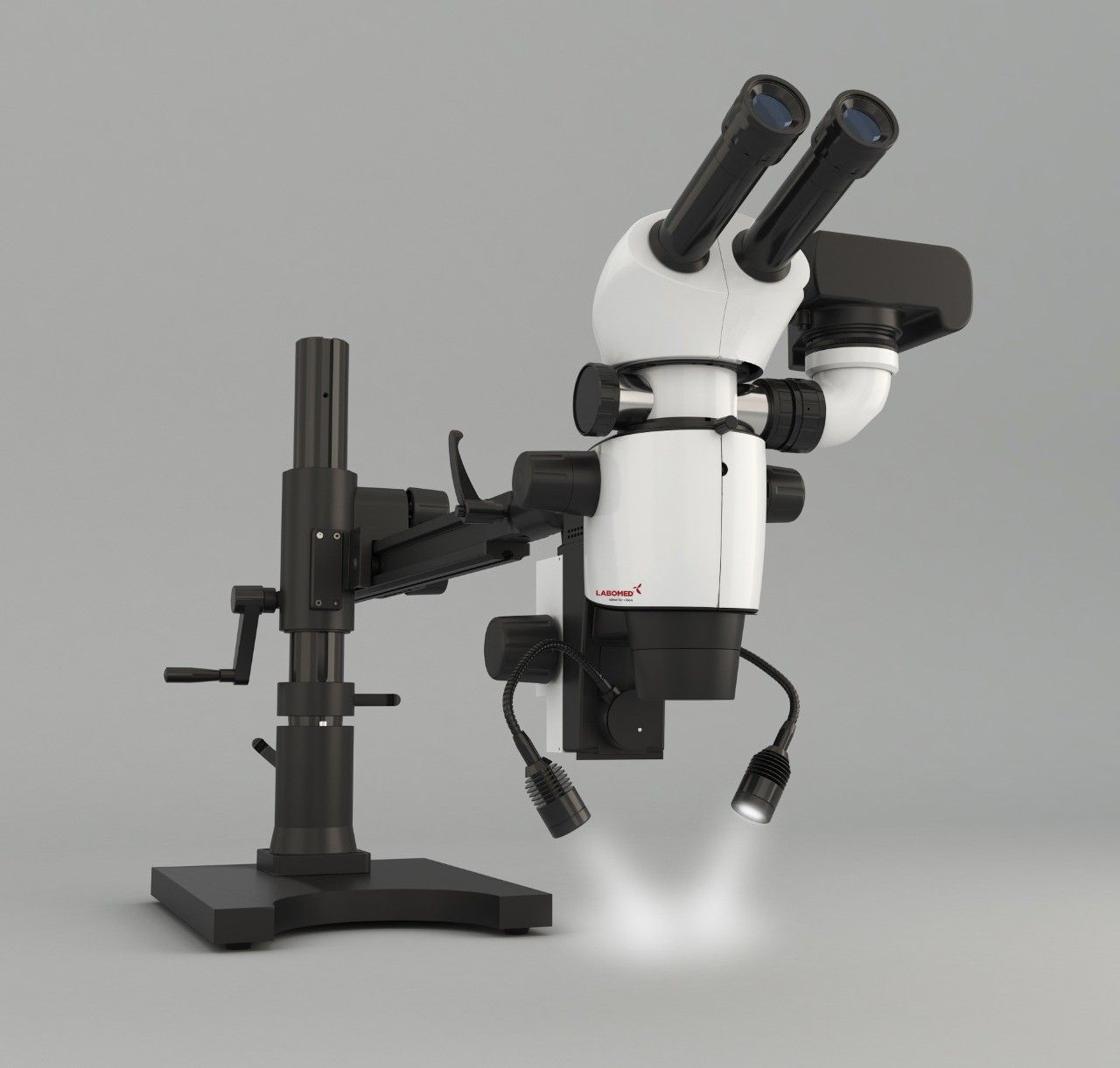
Labomed Industrial Inspection Microscopes are designed to support demanding inspection environments across electronics manufacturing, assembly, and quality control applications.
Built around optical performance, imaging flexibility, and ergonomic operation, Labomed inspection systems help manufacturers perform detailed PCB inspection, verify assembly quality, and support critical production workflows.
Whether used as a benchtop inspection microscope for PCB applications, a zoom microscope for electronics QC, or an advanced imaging solution for manufacturing verification, Labomed systems are designed to deliver the clarity and reliability required in modern industrial environments.
FAQs
Q. What is an inspection microscope used for in electronics manufacturing?
A. An inspection microscope is used to evaluate components, solder joints, assemblies, and finished products throughout electronics manufacturing and quality control processes.
Q. What is the best microscope for PCB rework and assembly?
A. The best microscope for PCB rework and assembly depends on the application, but systems with strong optics, adjustable magnification, and comfortable working distance are often preferred.
Q. Why is a stereo microscope used for electronics assembly?
A. A stereo microscope for electronics assembly provides three-dimensional viewing, making it easier to evaluate component placement, solder joints, and assembly details.
Q. What magnification is needed for PCB inspection?
A. The required electronics inspection microscope magnification varies depending on component size and inspection requirements. Most applications benefit from a flexible magnification range rather than a fixed high-power setting.
Q. Are digital microscopes useful for PCB quality control?
A. Yes. A digital inspection microscope PCB system can support documentation, training, reporting, and collaborative quality review processes.
Q. How do inspection microscopes improve quality control?
A. Inspection microscopes help identify defects, verify assembly accuracy, support visual inspection, and maintain consistent quality standards throughout production.
Q. What should I look for in a PCB quality control microscope?
A. Key considerations include optical clarity, lighting quality, magnification flexibility, imaging capabilities, working distance, and overall workflow compatibility.
Explore inspection microscope solutions designed to support PCB assembly, electronics manufacturing, quality control, and production verification workflows.
Conclusion
As electronics continue to shrink in size and increase in complexity, reliable inspection becomes increasingly important throughout the manufacturing process.
The right inspection microscope supports quality control teams with the visibility needed to evaluate assemblies, verify workmanship, and maintain production standards with confidence.
Whether for PCB inspection, SMT verification, solder joint evaluation, or rework applications, a well-designed microscope remains an essential tool in modern electronics manufacturing.

© 2010-2026 Labo America, Inc. All Rights Reserved.