How Much Does a Dental Microscope Cost?

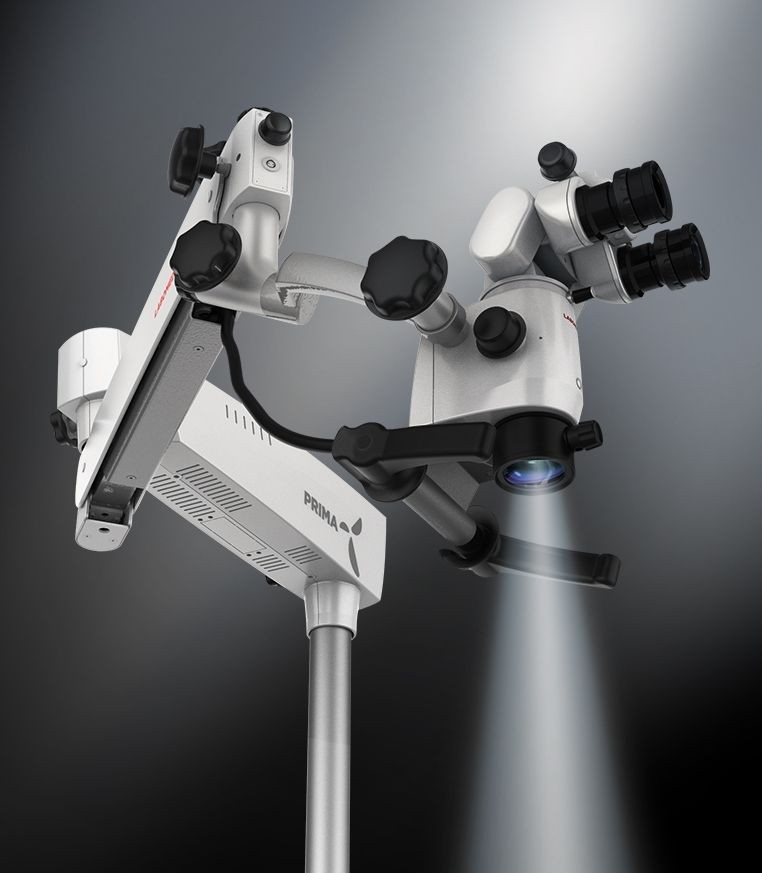
Key Takeaways:
1. Dental microscope cost varies considerably depending on optics, magnification, illumination, configuration, and imaging requirements.
2. A microscope with a camera, beamsplitter, specialized mounting, or additional modules will typically have a different price from a basic configuration.
3. Buyers should look beyond the purchase price and consider warranty, maintenance, service, and future upgrades.
4. The right system is one that fits the practice's clinical requirements rather than simply offering the highest specification.
Asking how much a dental microscope costs sounds like it should have a straightforward answer. In practice, the number depends on what is being purchased.
A dental operating microscope is a configurable clinical instrument. Optical performance, magnification range, illumination, ergonomics, imaging, mounting, and accessories can all influence the final price. For a dental practice evaluating an investment, therefore, the more useful question is not simply what a microscope costs, but what the quoted configuration includes and what it will cost to own over time.
What This Blog Covers
1. What Is the Average Cost of a Dental Microscope?
2. What Is the Typical Cost of a Dental Microscope?
3. What Factors Affect Dental Microscope Pricing?
4. What Is Included in the Purchase Price?
5. How Do Warranty, Service and Upgrades Affect Total Cost?
6. How Should You Compare Dental Microscopes?
7. Is a Dental Microscope Worth the Investment?
9. Dental Microscope Buying Checklist
What Is the Average Cost of a Dental Microscope?
There is no single price that applies to every dental microscope. The cost of an operating dental microscope depends on its optical system, magnification levels, illumination, ergonomic configuration, imaging capabilities, mounting option, and accessories.
For this reason, dental practices should request a configuration-specific quotation rather than comparing manufacturers on base price alone.
What Is the Typical Cost of a Dental Microscope?
The price of a dental microscope can vary substantially between configurations. A system intended primarily for clinical visualization will have different requirements from one configured for extensive photography, video capture, teaching, or multi-user use.
The starting price is therefore only one part of the purchasing decision.
A more useful comparison considers:
1. Optical quality and magnification range
2. Coaxial illumination
3. Binocular eyepieces
4. Ergonomic positioning
5. Variable objective options
6. Camera and video capability
7. Beamsplitter configuration
8. Mounting options
9. Accessories
10. Warranty and service
11. Upgrade options
This approach gives buyers a clearer picture of the total cost of ownership.
What Factors Affect Dental Microscope Pricing?
Magnification and Optics
The optical system is one of the most important components of a dental microscope. Magnification should be considered alongside image quality, depth of field, field of view, and how smoothly the clinician can move between magnification levels.
For a practice performing detailed endodontic or restorative work, investing in better optics may be more meaningful than simply choosing the highest available magnification.
Illumination and Ergonomics
A high-quality optical system needs appropriate illumination to perform at its best. Coaxial illumination directs light into the same field being viewed, helping reduce shadows in deep or confined areas.
Ergonomics also matter. A microscope that allows appropriate positioning and comfortable access to the treatment field can influence how easily it integrates into daily clinical work.
Camera and Documentation Features
A dental microscope with camera capabilities will generally involve additional components, such as a camera, beamsplitter, adapters, and recording equipment.
For practices that routinely document cases or use images for patient communication and education, these additions may justify the additional investment.
For others, a basic configuration may be sufficient.
Mounting and Configuration Options
The physical configuration can also affect the price of a dental microscope.
Depending on the operatory and workflow, buyers may consider different mounting options, including floor stands, wall mounts, or other configurations. The right choice depends on available space, mobility requirements, and whether the microscope needs to serve more than one clinical environment.
What Is Included in the Purchase Price?
This is an important question to ask before comparing quotations.
A microscope quotation may include the main optical system but treat certain accessories, imaging components, mounting hardware, or other modules separately.
Before purchasing, clarify whether the quoted price includes:
1. Microscope and optical system
2. Objective lens
3. Eyepieces
4. Illumination system
5. Mounting configuration
6. Camera or imaging components
7. Beamsplitter
8. Required adapters
9. Installation
10. Training
11. Warranty coverage
12. Service and support
A lower initial quote is not necessarily lower once the required configuration is complete.
How Do Warranty, Service and Upgrades Affect Total Cost?
The purchase price is only part of the financial picture.
Dental microscope warranty coverage can provide important protection against unexpected repair costs, while accessible service and maintenance can help minimize disruption to clinical workflows.
It is also worth asking about dental microscope upgrade options. A system that can accommodate additional imaging or other modules may provide more flexibility as the practice's requirements develop.
For buyers comparing long-term investments, these considerations can be just as relevant as the initial price.
How Should You Compare Dental Microscopes?
Rather than asking only which microscope is cheapest, compare systems against the requirements of your practice.
Consider:
1. Clinical use: Which procedures will the microscope support?
2. Optics: Is the image quality appropriate for the level of detail required?
3. Magnification: Does the range suit your workflow?
4. Illumination: Is the treatment field evenly and adequately illuminated?
5. Ergonomics: Can the microscope be positioned comfortably?
6. Imaging: Do you need photography or video capture?
7. Configuration: Will the mounting option work in your operatory?
8. Support: What warranty, maintenance, and service are included?
9. Future requirements: Can the system be upgraded?
This creates a much more useful dental microscope buyer's checklist than comparing specifications in isolation.
Is a Dental Microscope Worth the Investment?
For practices where enhanced visualization, ergonomics, documentation, and precision are central to the clinical workflow, a dental microscope can represent a meaningful long-term investment.
The return is not necessarily limited to direct financial output. The value can also come from the microscope's role in clinical workflow, patient communication, documentation, and clinician ergonomics.
Whether a particular system is worth the investment depends on how frequently it will be used, which procedures it will support, and how well its configuration matches the practice.
Labomed Dental Microscopes
Labomed offers dental microscopy systems designed for different clinical and educational requirements.
The portfolio includes the Prima Trainer, Prima Lite, Prima Pro, and Magna, allowing practices to consider different configurations based on their intended use.
The Magna, for example, combines continuous optical zoom with an electromagnetic clutch system for microscope positioning. The Prima range provides configurations suited to clinical and training environments.
For buyers comparing the best dental microscope for a dental practice, the focus should be on finding the right combination of optical performance, ergonomics, configuration, and long-term support rather than selecting a system based on price alone.
Dental Microscope Buying Checklist
Before requesting a quotation, consider:
1. Required magnification range
2. Optical quality
3. Coaxial illumination
4. Ergonomic positioning
5. Working distance
6. Objective lens options
7. Camera and video requirements
8. Beamsplitter requirements
9. Mounting configuration
10. Included accessories
11. Warranty coverage
12. Maintenance and service
13. Future upgrade options
14. Training and installation
FAQs
Q. What Is the Average Cost of a Dental Microscope?
A. There is no universal average. Dental microscope cost varies according to the optical system, configuration, imaging, mounting, accessories, and support package selected.
Q. What Is the Price Range for a Dental Operating Microscope?
A. The price range varies between manufacturers and configurations. A meaningful comparison should account for the complete configuration rather than the base microscope alone.
Q. What Features Make a Dental Microscope More Expensive?
A. Advanced optics, broader magnification ranges, imaging systems, beamsplitters, specialized mounting, additional accessories, and upgradeable modules can all affect the final price.
Q. Does a Dental Microscope With a Camera Cost More?
A. Generally, adding a camera and related imaging components increases the overall investment. The value depends on whether the practice requires documentation, photography, video, or patient education.
Q. What Should Be Included in a Dental Microscope Purchase?
A. The quotation should clearly specify the microscope, optics, illumination, objective, mounting system, accessories, imaging components where applicable, installation, training, warranty, and service terms.
Q. How Does Warranty Affect the Cost of a Dental Microscope?
A. A comprehensive warranty can reduce exposure to unexpected repair costs. Buyers should compare both the length and scope of coverage rather than treating warranty simply as an added feature.
Q. Is a Dental Microscope Worth the Investment for a Dental Practice?
A. For practices that regularly perform procedures requiring detailed visualization, the investment can provide value through improved clinical workflow, ergonomics, documentation, and precision. The right choice depends on the practice's actual requirements and expected usage.
Conclusion
The question of how much a dental microscope costs cannot be answered properly with a single number. The final investment depends on the microscope's optical performance, illumination, ergonomics, imaging requirements, mounting configuration, accessories, and support.
For dental practices, the better approach is to compare the complete system and its expected lifetime of use. A microscope that fits the clinical workflow, offers the required optical performance, and provides appropriate warranty, service, and upgrade options can offer considerably more value than a lower-priced system that requires significant additions later.
For Labomed, the emphasis is on giving dental professionals microscopy solutions that can be configured around their actual requirements. The Prima Trainer, Prima Lite, Prima Pro, and Magna provide different options for practices and educational environments looking to incorporate advanced microscopy into their workflows.
Explore Labomed Dental Microscopes and schedule a demo to evaluate the right configuration for your practice.

© 2010-2026 Labo America, Inc. All Rights Reserved.