What Is a Digital Microscope? Core Features and Components

Key Takeaways
- A digital microscope definition centers on image capture, display, and interaction, not just magnification
- The components of a digital microscope combine optics, sensors, and software into one system
- Understanding how a digital microscope works helps in choosing the right setup for your needs
- Modern digital microscope features focus on recording, analysis, and connectivity
- In a digital vs optical microscope comparison, digital systems offer more flexibility for collaboration and documentation
- Digital microscopes are widely used where visibility, sharing, and repeatability matter most
Dentistry has moved past basic visibility. Today, clinical success depends on how precisely you can see, how consistently you can work, and how comfortably you can perform over long procedures.
A dental microscope is no longer just a magnification tool. It’s a complete clinical system that directly impacts diagnosis, treatment accuracy, ergonomics, and patient communication.
This guide breaks down the key features of a dental microscope and explains how each one contributes to better outcomes in everyday practice.
What This Blog Covers
- How a digital microscope works and what makes it different
- The key components that make up a digital microscope system
- Modern digital microscope features and how they support real workflows
- How digital and optical microscopes compare in practice
- Where digital microscopes are used today and why
- FAQs
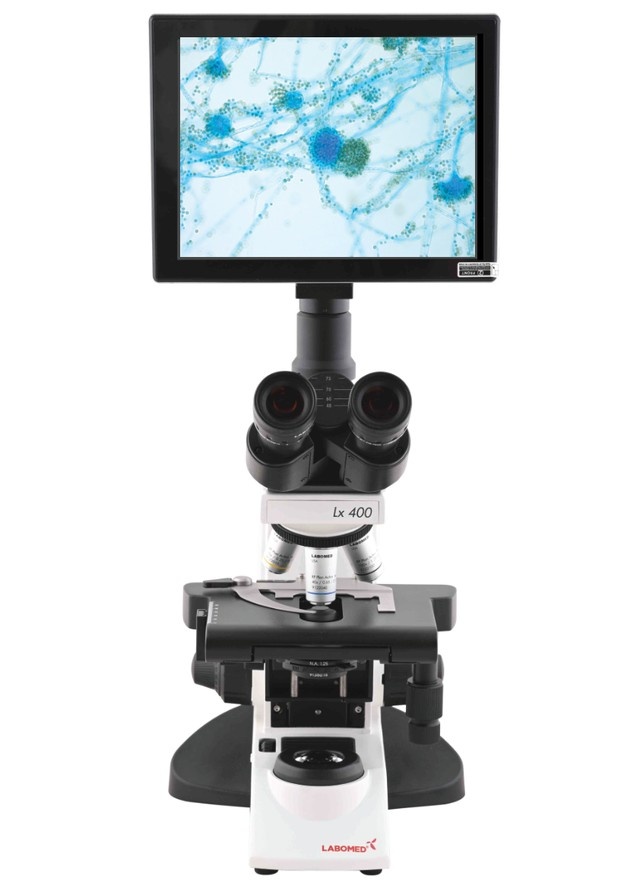
A digital microscope is a system that uses a built-in camera and sensor to capture magnified images and display them on a screen such as a monitor or computer. Instead of viewing through eyepieces, users interact with images digitally, enabling recording, analysis, and sharing.:
How a Digital Microscope Works
At a basic level, the shift is simple but important.
Instead of sending the image directly to your eyes, the microscope sends it to a sensor. That sensor converts what it sees into a digital signal, which then appears on a screen.
That’s the foundation of how a digital microscope works.
From there, everything opens up. You can pause on a frame, zoom in digitally, capture an image, or record a process as it happens. In a classroom, that means an entire group can follow along. In a lab, it means observations can be documented instead of just noted.
Looking at the Components That Make It Work
If you break the system down, the components of a digital microscope are fairly straightforward, but how they work together is what matters.
At the center is a high-resolution CMOS sensor. This is what actually captures the image. Paired with it is an integrated camera system that converts what the optics see into digital output.
Instead of eyepieces, there’s a display, either built-in or connected externally. This is where the viewing experience shifts completely. You’re no longer adjusting your position to see the sample. You’re interacting with it on a screen.
Lighting also plays a bigger role than most people expect. An LED illumination system provides consistent, controlled light, which directly affects how much detail you can actually see.
Then there’s connectivity. USB or direct computer integration allows the system to store, transfer, and process images. That’s where the microscope stops being just a viewing tool and becomes part of a larger workflow.
What Defines Modern Digital Microscope Features
The real difference shows up in how the system is used.
Modern digital microscope features are built around flexibility. You’re not just observing, you’re working with the image.
You can capture still images in real time. You can record video during a procedure or experiment. You can measure, annotate, and analyze using software that’s built into or connected to the system.
This is where computer-compatible microscopy becomes important. The microscope is no longer isolated. It connects to systems, to files, to reports.
That’s what makes it relevant in environments where documentation matters just as much as observation.
Digital vs Optical Microscopes
The comparison between digital vs optical microscope setups isn’t really about which one is better. It’s about how each one is used.
Optical microscopes are direct and simple. You look through them and see the sample in real time. That still works well in many settings.
Digital microscopes, on the other hand, change the workflow. They make it easier to share what you’re seeing, to save it, and to revisit it later. They’re more aligned with how labs, classrooms, and industrial environments operate today.
So the shift isn’t just technical. It’s practical.
Where Digital Microscopes Fit Today
Digital microscopes are now standard in places where visibility needs to extend beyond one person.
In education, they allow instructors to guide students through the same view instead of explaining it separately. In research, they support documentation and repeatability. In industrial settings, they’re used for inspection and quality control where records matter.
That flexibility is what makes them widely adopted across different fields.
Labomed and Digital Microscopy
Labomed has been in the microscopy space for decades, and that experience shows in how their systems are built.
Instead of treating digital microscopy as an add-on, their approach reflects a broader digital microscopy system overview, where imaging, usability, and durability are considered together.
Across their solutions, there’s a clear focus on reliability and practical use. Systems are designed to integrate with existing workflows, whether that’s in a teaching lab, a research environment, or an industrial setup.
With a global presence and long-standing experience in scientific and medical imaging, Labomed continues to build systems that balance performance with usability. The emphasis isn’t just on features, but on how those features hold up in real-world conditions.
FAQs
Q. What is a digital microscope used for?
A. It’s used anywhere you need to see fine detail and also capture it. In classrooms, it helps everyone look at the same thing at once. In labs and industrial settings, it’s more about documenting what you see so it can be reviewed or shared later.
Q. What are the components of a digital microscope?
A. Most systems are built around a sensor, a camera, a light source, and a display. The sensor captures the image, the camera processes it, and the screen shows it. Everything else is really there to make that process smoother and more usable.
Q. How does a digital microscope work?
Q. Instead of looking through lenses directly, the microscope captures the image using a sensor and sends it to a screen. From there, you can zoom in, take a snapshot, or record video. It feels less like “looking” and more like interacting with the image.
Q. What are the benefits of using a digital microscope?
A. The biggest advantage is flexibility. You can save what you’re seeing, share it with others, and come back to it later. It also makes collaboration easier, especially in teaching or team-based environments.
Q. What is the difference between a digital microscope and an optical microscope?
A. An optical microscope is more traditional, you look through it and that’s it. A digital microscope puts the image on a screen, which means you can record it, analyze it, and share it. So the difference is really in how you use it, not just how it looks.
Explore digital microscope solutions designed for clear imaging, efficient workflows, and reliable performance across laboratory and educational environments.
Conclusion
The difference between standard care and exceptional care often comes down to visibility, control, and consistency.
The right microscope doesn’t just enhance what you see. It improves how you work, how you diagnose, and how confidently you treat.
Understanding these must-have features in a dental microscope helps clinicians make informed decisions that directly impact outcomes, efficiency, and long-term practice growth.
Because in modern dentistry, precision isn’t optional. It’s expected.

© 2010-2026 Labo America, Inc. All Rights Reserved.